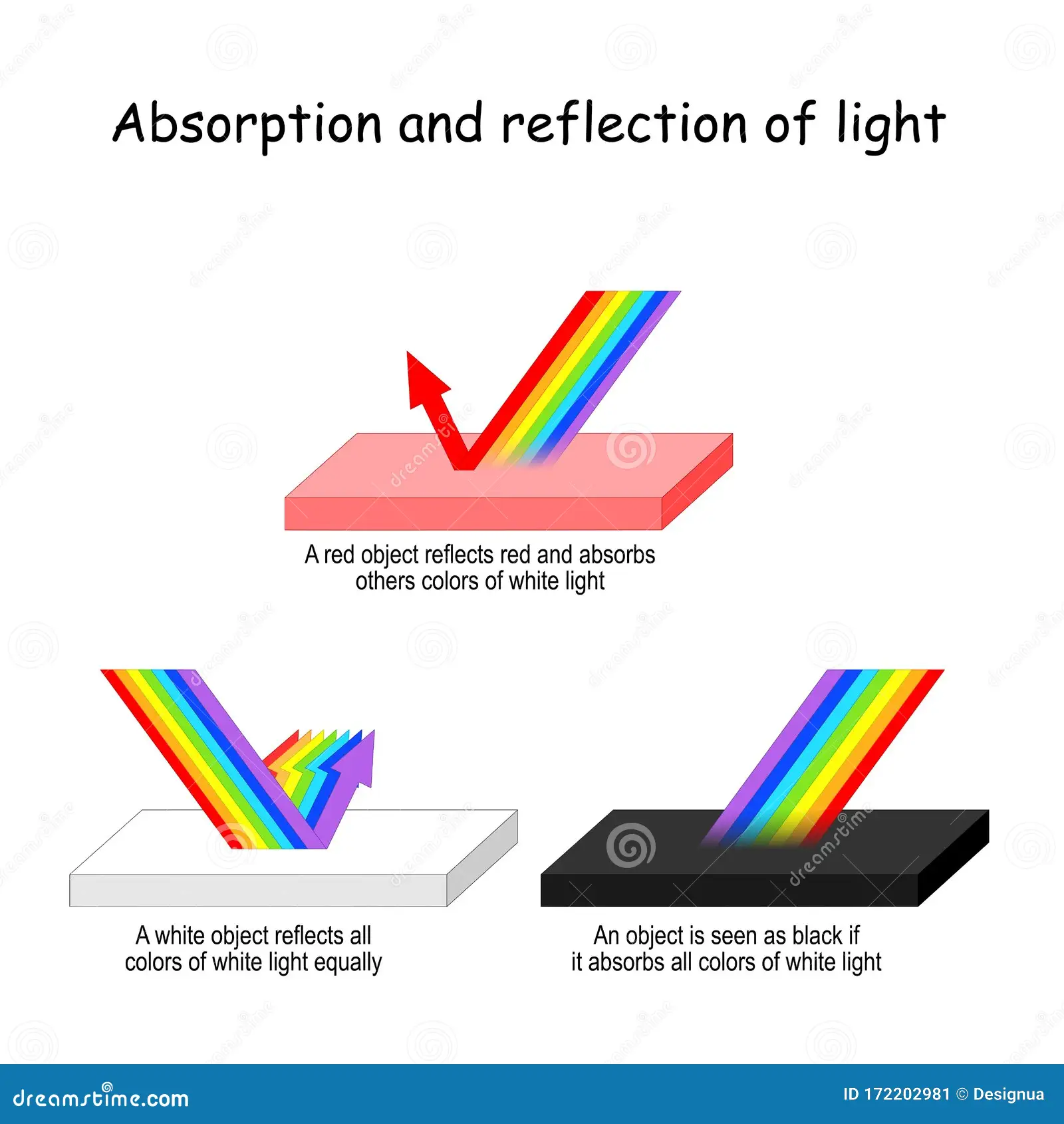
Reflected colors are created through the subtractive color model, typically CMYK (Cyan, Magenta, Yellow, and Key/Black). In this system, pigments or inks absorb (subtract) certain wavelengths of light and reflect others back to your eyes. When light hits a printed surface (e.g., a book, a painting), certain colors of light are absorbed by the pigments, while others are reflected. The reflected light is what we see as color. This model is used for physical materials such as paint, ink, and any surface that reflects light.
Projected colors use the additive color model, typically RGB (Red, Green, and Blue). In this system, light is emitted directly from a source (such as your computer screen, TV, or phone), and the colors are created by adding different intensities of red, green, and blue light. Instead of reflecting light, screens emit light. The combination of red, green, and blue light in varying intensities creates the different colors we see. For example, combining red and green light creates yellow, while combining all three at full intensity creates white. This model applies to electronic displays like monitors, televisions, and digital projectors.
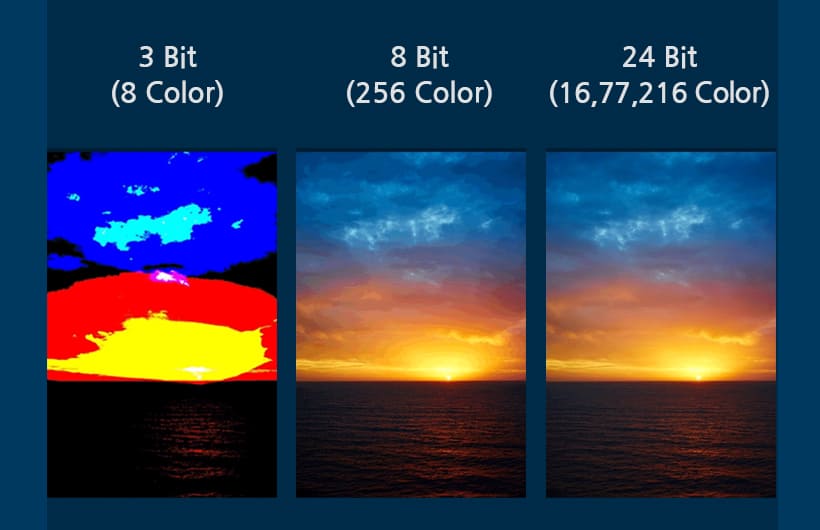
Color in a digital image is represented either by indexed color or 24-bit color, depending on the image’s needs for color range and file size. Indexed color uses a limited color palette, typically up to 256 colors. Each pixel in the image stores an index number that refers to a color in this palette, rather than the actual color value. This method is often used in formats like GIF, where file size is important, making it ideal for simple graphics like logos or icons.
On the other hand, 24-bit color (also known as true color) uses 24 bits per pixel, with 8 bits each for red, green, and blue, allowing for over 16 million colors. This method ensures accurate color reproduction and is essential for high-quality images like photographs, where subtle gradients and a wide range of colors are necessary. While indexed color is more efficient for smaller, simpler graphics, 24-bit color provides the depth needed for complex and detailed visuals.